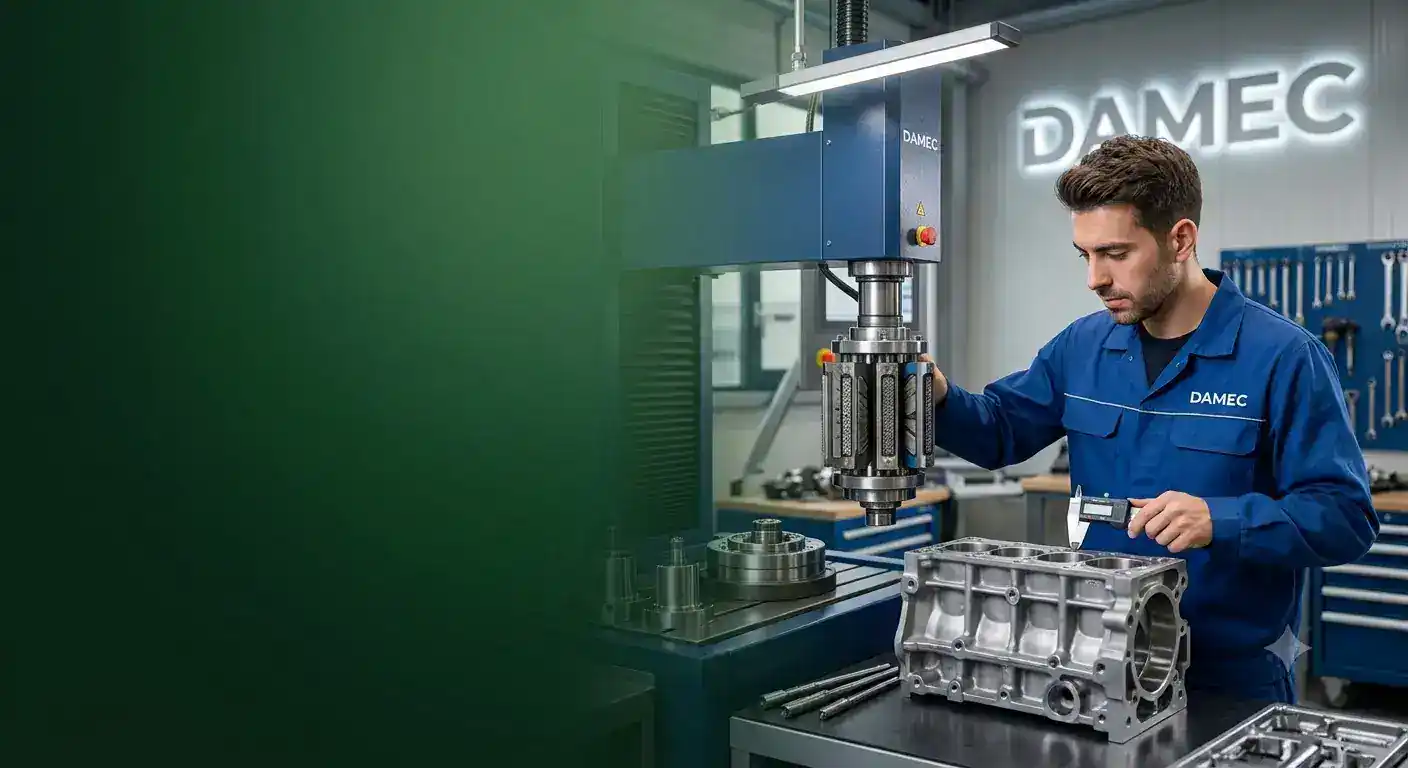
The quality of hole finishing does not depend on a single factor, but on the interaction between various components of the process.
The machine, the tool, the abrasive, and the fluids used all contribute to the final machining result. For this reason, selecting each component correctly is essential for achieving precision, finish quality, and repeatability.
In this article, we provide a general overview of the main elements involved in the hole-sanding process.
The hole-sanding machine
The first factor to consider is the machine. Production requirements may call for different solutions, depending on the characteristics of the component and the hole to be machined.
Damec offers various types of hole-sanding machines, including:
- horizontal sanding machines;
- vertical sanding machines;
- automated machines;
- Customized solutions for specific production needs.
The choice of machine must take into account the characteristics of the machining process, the components to be processed, and the required level of automation.
👉 For more information, see also “Horizontal Sanding Machines” and “How to Choose the Right Machine for Sanding Holes.”
Tools and abrasives: the heart of machining
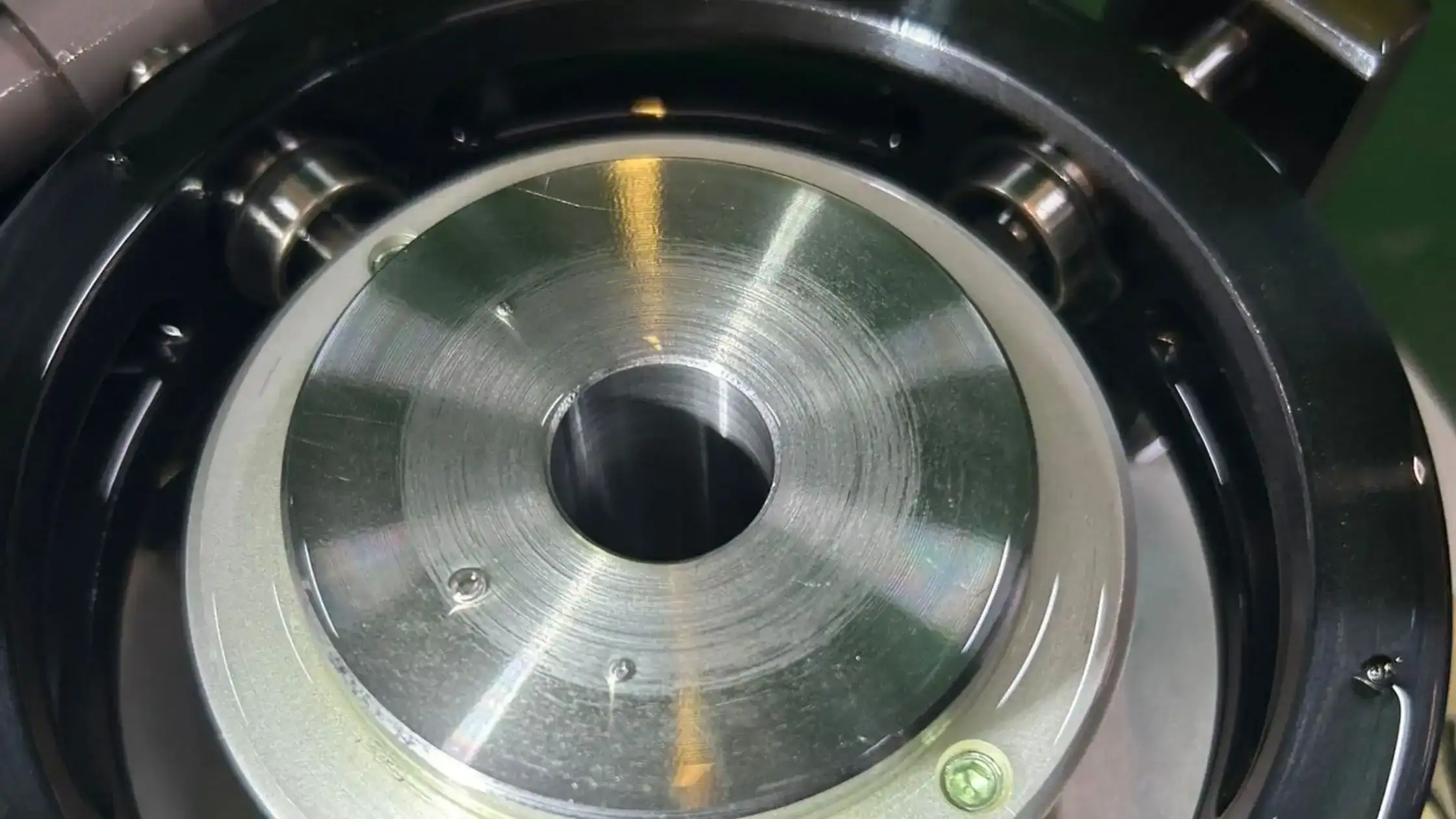
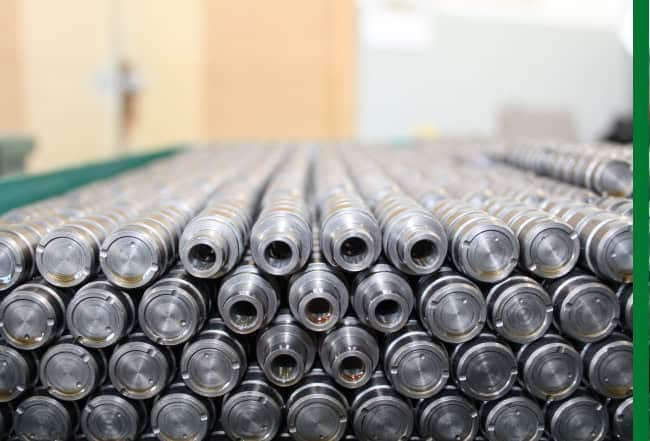
Hole-sanding tools are used to perform finishing operations on the inner surface of the component.
Depending on the application, various solutions can be used, including multi-flute tools, single-pass tools, reamers, and specialized tools designed to meet specific machining requirements.
The choice of abrasive is also important. Abrasive stones and strips are available in various compositions and grit sizes, which should be selected based on the material and the desired result.
👉 Learn more in the articles “Tools for Sanding Holes” and “Tools and Abrasives for Sanding.”
The Role of Fluids in Hole sanding
During the grinding process, machining fluids play an important role in process control.
Dedicated systems help maintain the proper operating conditions and contribute to temperature control, while filtration systems help keep the fluid in the condition required for the process.
Proper fluid management and filtration are therefore factors to consider throughout the entire manufacturing cycle.
👉 Learn more about lapping oil and Damec’s solutions for finishing processes.
From design to manufacturing: an integrated process
To achieve consistent results when smoothing holes, all components must be properly integrated.
The choice of machine must be appropriate for the component to be machined.
The tool and abrasive must be suitable for the material and the required specifications. Finally, fluids, filtration, and cooling systems contribute to process control.
It is this integrated approach that makes it possible to work toward goals of precision, surface quality, and repeatability.
Manual, automated, and robotic sanding
Production requirements can vary greatly. For this reason, the hole-polishing process can be set up with different levels of automation.
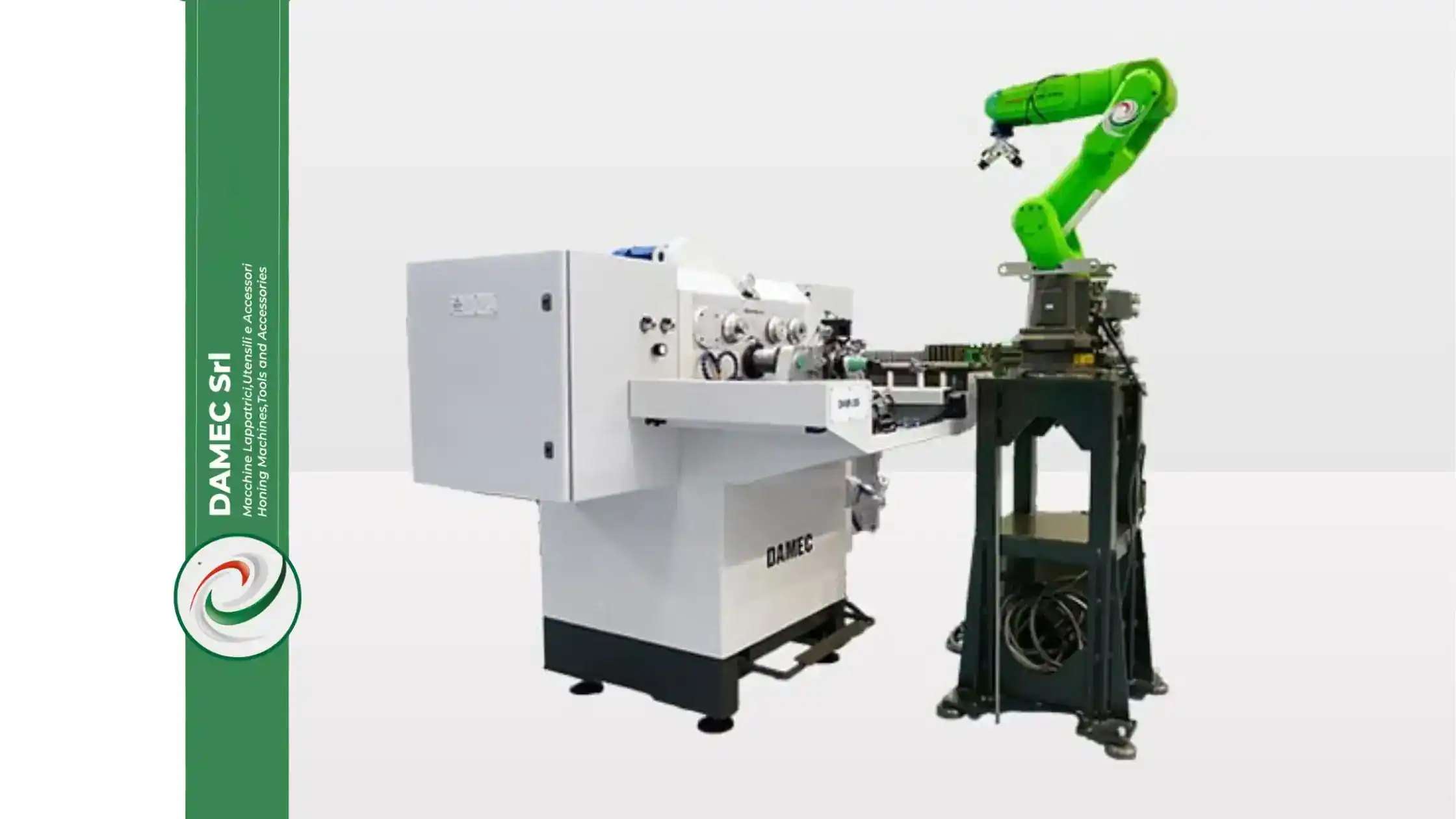
Automated sanding machines can be integrated with automation systems and industrial robots, offering solutions designed for production processes that require high productivity and repeatability.
The most suitable configuration depends on the characteristics of the production process and the company’s specific needs.
👉 Discover Damec’s solutions for automated hole sanding.
A comprehensive process for precise results
Hole finishing is the result of a process in which every element contributes to the final quality: from the machine to the tools, from the abrasives to the fluids and filtration systems.
For this reason, partnering with a company that can offer a comprehensive view of the process can provide added value for companies in the precision machinery industry.
Damec develops machines, tools, and solutions for hole grinding and lapping, helping companies choose the configuration that best suits their needs.
Would you like to learn more about the hole-polishing process?
Discover Damec’s solutions or contact our team for more information.