
When grinding holes, the choice of tools and abrasives plays a crucial role in achieving high-quality results. It is not just about the machine: tools, grinding wheels, adaptors and lubricants directly influence precision, surface finish and the duration of the process.
In this guide, we look at how to choose the most suitable grinding tools and what factors to consider in order to optimise performance.
Types of sanding tools: which one should you choose?
Sanding tools are categorised according to the type of work and the desired result.
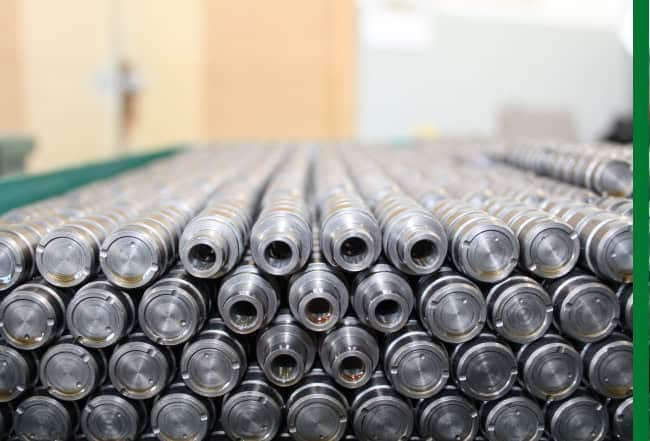
Multi-stone tools
Ideal for precision machining of internal bores, they guarantee:
- high stability
- uniformity of finish
- excellent repeatability
They are particularly suitable for mass production.
Single-pass tools (milling cutters)
Gear cutters enable rapid machining with controlled material removal:
- cents range
- range of grain sizes available
- ideal for fast production cycles
Hand-held sanding tools
Versatile solutions for machining directly on the workpiece:
- ideal for large components
- suitable for use in maintenance or on-site work
Adapters and interface systems
Tool adaptors ensure compatibility with a range of spindles and machines, enhancing the system’s flexibility and modularity.
Abrasive stones for sanding: materials and applications
Abrasive stones for sanding are at the heart of the process. Their composition determines the quality of the finish and the efficiency of the process.
Diamond
- high cutting capacity
- ideal for hard materials and composites
CBN (Cubic Boron Nitride)
- ideal for hardened steels
- ideal for hardened steels
Resinoid binders
- suitable for ultra-fine finishes
- used on delicate materials
The right combination of abrasive and workpiece is essential for achieving controlled surface roughness and uniform surfaces.
The role of lapping oil and cooling systems
As well as the tools, the lubricant used for grinding and lapping also affects performance:
- reduces friction and overheating
- improves surface quality
- makes it easier to remove debris
The use of cooling and filtration systems helps to maintain consistent machining conditions, thereby extending the service life of the tools.
Tool customisation: a strategic factor
Every production process has its own specific characteristics. This is why the customization of sanding tools is a key factor.
Tailor-made solutions enable you to:
- optimize cycle times
- improve the final quality
- reduce waste and rework
Proper technical support allows you to determine the ideal configuration based on material, geometry, and production volumes.
Tool Regeneration: Reducing Costs and Increasing Efficiency
The reconditioning of abrasive tools is an increasingly common solution for:
- reduce operating costs
- extend the life of tools
- maintain consistent performance
A professional refurbishment service delivers results comparable to those of a new product, with reduced economic and environmental impact.
Conclusion
The selection of sanding tools and abrasives cannot be left to chance: it is a strategic factor in ensuring quality, productivity, and process control.
👉 Damec offers a complete range of tools, abrasive wheels, adapters, and custom solutions for hole finishing, supporting companies with technical consulting and dedicated services.
📩 Contact us to find the solution best suited to your manufacturing needs and improve the performance of your production process.