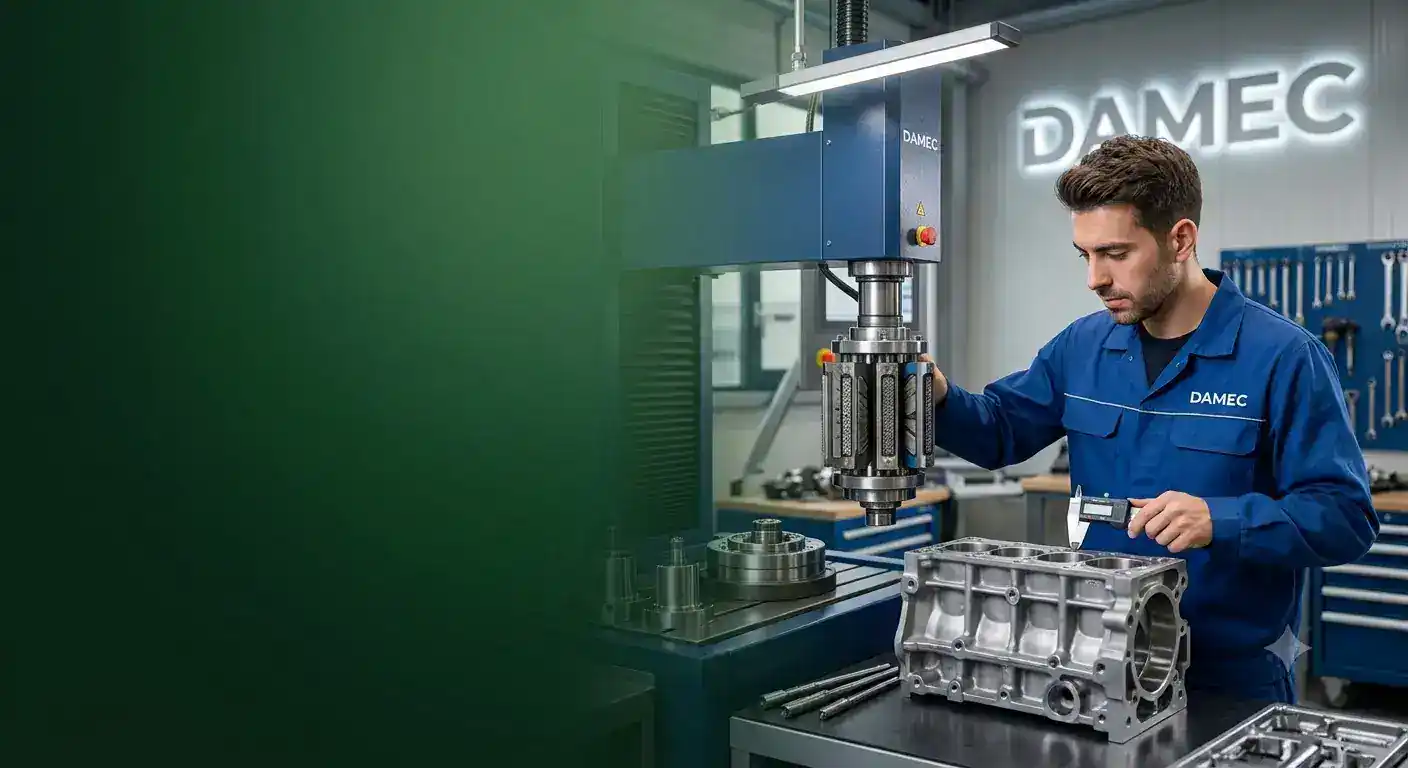

When performing hole finishing operations, choosing the most suitable machine and tool is essential for achieving a precise and repeatable result.
In fact, there is no one-size-fits-all solution: the process setup must be evaluated based on the component, the hole to be machined, the material, and production requirements.
The machine, tool, and abrasive must therefore be considered as parts of a single process.
How to Choose a Hole-Sanding Machine
The first decision concerns the type of machine.
Based on the characteristics of the machining and production processes, you can evaluate:
- horizontal sanding machines;
- vertical sanding machines;
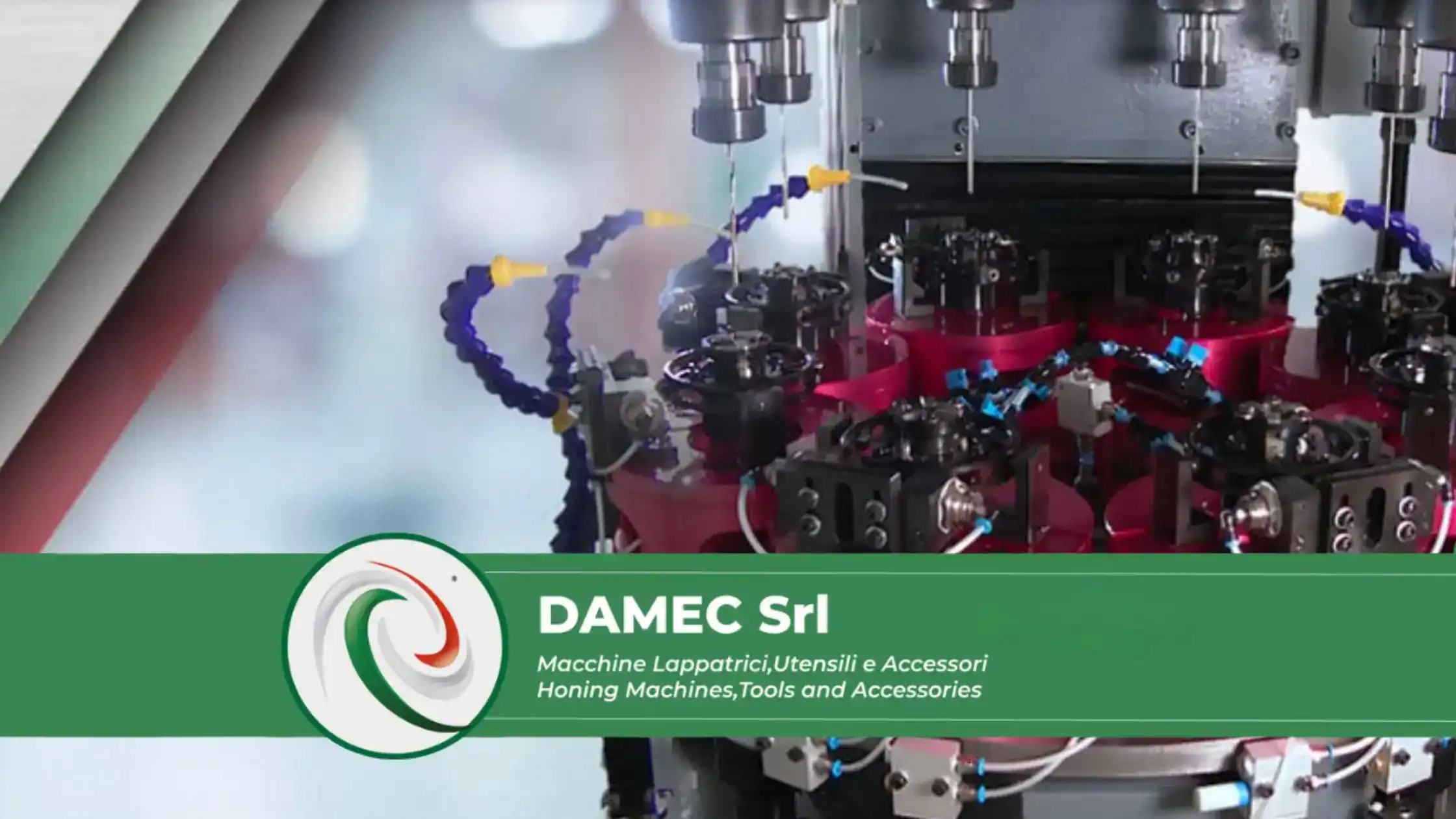
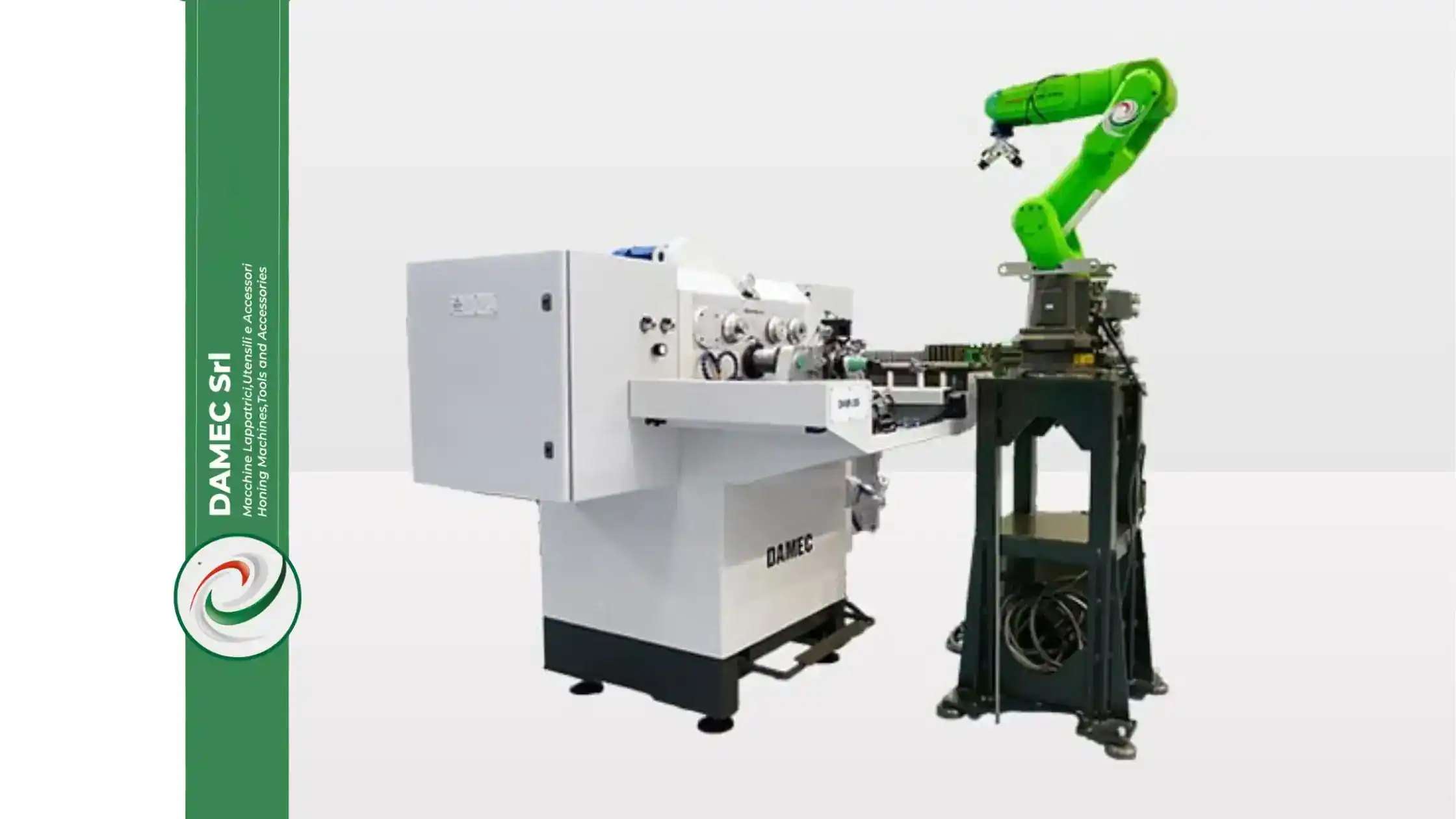
- automated machines;
- Customized solutions for specific production needs.
Key factors to consider include the characteristics of the hole, the dimensions of the component, the required level of precision, and production volumes.
The level of automation can also influence the choice, especially when dealing with high production volumes and seeking greater process consistency.
👉 Discover the “Damec Horizontal Grinding Machines” and learn more about “How to Choose the Right Machine for Grinding Holes.”
The Importance of Sanding Tools
Once the machine has been identified, you need to determine which tool is best suited for sanding the hole.
Damec offers several solutions, including:
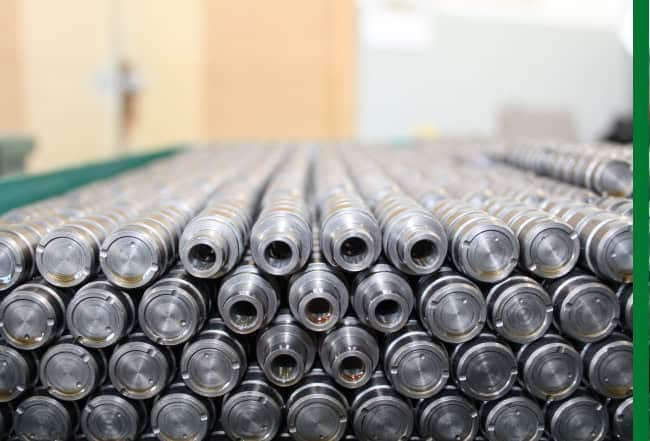
- multi-stone tools;
- single-pass tools;
- rolling stock;
- handheld tools;
- Special tools manufactured to a drawing or sample.
The choice depends on the component’s characteristics and the objectives of the machining process.
The right tool allows you to approach the process in a way that meets the requirements for precision, finish, and repeatability.
👉 Learn more about this topic in the article “Tools for Sanding Holes.”
The Role of Abrasives
The choice of abrasive is also an important part of the hole-sanding process.
Damec offers a variety of grinding stones and abrasives, which can be selected based on the characteristics of the machining process and the material to be processed.
The right combination of machine, tool, and abrasive helps achieve the desired result and maintain machining quality over time.
👉 See also “Sanding Tools and Abrasives” to learn more about the available solutions.
Machines, Tools, and Fluids: An Integrated System
The choice of a solution for hole finishing is not limited to the machine or the tool.
Process fluids, cooling systems, and filtration are also part of overall process management and must be evaluated based on the requirements of the manufacturing process.
To achieve consistent results, it is therefore important to consider all the elements as a whole.
👉 For more information, see “The Complete Sanding Process: Machines, Tools, and Fluids.”
When should you choose an automated solution?
For high-volume production, it may be worthwhile to consider integrating automation systems into the hole-sanding process.
Damec automated machines can be configured with various automation systems and, upon request, integrated with industrial robots for automated machining.
These solutions are designed for companies seeking high productivity, process continuity, and repeatable results.
The most suitable configuration must be evaluated based on the characteristics of the production process and the customer’s specific needs.
👉 Check out Damec’s solutions for “Automated Hole Sanding” too.
The right solution starts with an analysis of the manufacturing process
Choosing machines and tools for hole finishing involves evaluating several factors at the same time.
Component characteristics, hole geometry, material, required precision, surface finish, and production volumes are all factors that contribute to selecting the most suitable solution.
Damec offers a comprehensive range of machines, tools, abrasives, and solutions for hole finishing, with the goal of helping companies identify the process best suited to their needs.
Do you need to find the right solution for your production?
Contact Damec to learn more about the available options and work with us to determine the configuration best suited to your manufacturing needs.